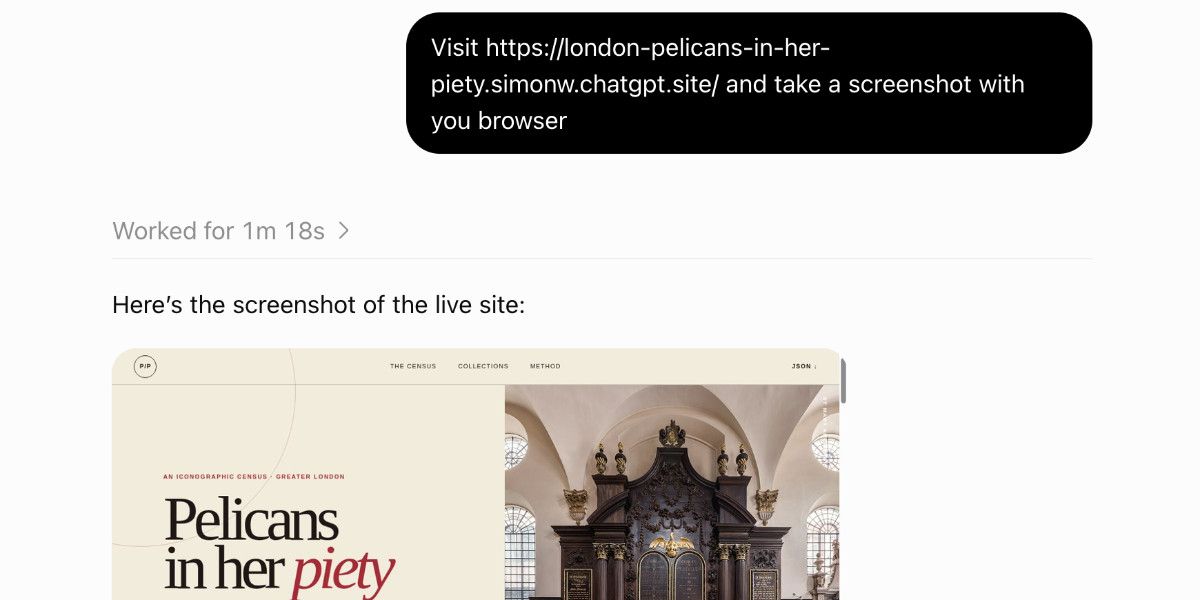
OpenAI announced ChatGPT Work on July 9 and has been iterating on it ever since. Simon Willison calls it an extraordinarily confusing and very powerful product, and his new deep dive unpacks exactly why. The key insight: ChatGPT Work is actually two products under one name. Work Cloud runs in the cloud through chatgpt.com and the mobile apps, while Work Local is the desktop app, formerly known as Codex, that can access files and run programs directly on your computer.
Work is for paid subscribers only. Free users and the low-cost Go tier do not get access, so you need the 20 dollars a month plan or above. Compared with regular Chat, Work adds a genuinely different feature set: a choice of GPT-5.6 Sol, Luna and Terra models with six reasoning levels, a code execution environment with internet access, a full headless Chrome browser, a persistent filesystem shared across sessions, the ability to publish ChatGPT Sites, and sub-agent sessions that run in parallel.
Willison's rule of thumb: use Chat for answers, explanations and short drafts, and Work when you want ChatGPT to complete a task with a clear outcome, like a brief, deck, analysis or recurring workflow. For founders, the persistent filesystem and scheduled automations show where OpenAI is heading, turning ChatGPT from a chat tool into something closer to a delegated worker.