A dermatologist has published a head-to-head test that undercuts the assumption that frontier language models win at everything. Dr Magnus Lynch showed GPT-6 Astra and Claude Fable 5.1 the same 200 biopsy-proven skin lesions, each photographed twice: a clinical close-up and a dermoscopic view through the skin microscope dermatologists use. The models named the correct diagnosis in 84 and 85 cases, roughly 42%. A fine-tuned Inception v3, a convolutional network Google first published in 2015, got 125 right, or 62%. The network was tuned for about twenty minutes.
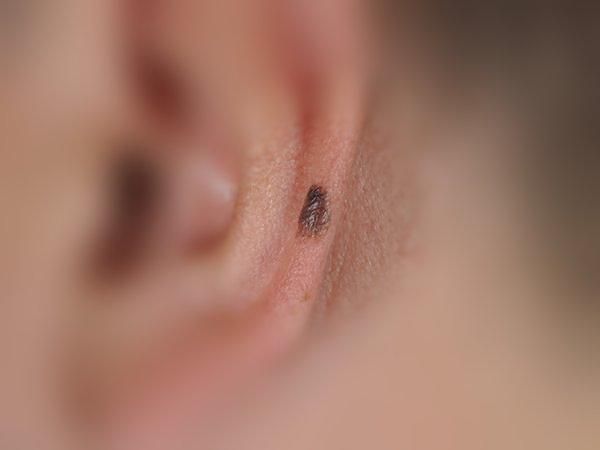
The case that matters most is a thin invasive melanoma on an ear. Both frontier models called it a harmless seborrhoeic keratosis and said the patient could be discharged. The CNN called it a melanoma on the dermoscopy view. The lesions come from MILK10k, a public dataset released through the International Skin Imaging Collaboration in 2025, and every one carries histopathology confirmation. Even the benign moles were biopsied, because a mole a clinician cuts out is one that already worried them.
For founders the lesson is practical. General-purpose models are strong reasoners but they do not automatically beat narrow, well-tuned networks on specialised visual or diagnostic tasks where labels are objective and the data is curated. Twenty minutes of fine-tuning on domain data produced a 20-point accuracy gap over two of the most capable models available in October 2026. If your product rests on a prediction task, benchmark a small specialist model against the frontier API before assuming the bigger model wins. It may be slower, costlier and less accurate at the one job that matters.