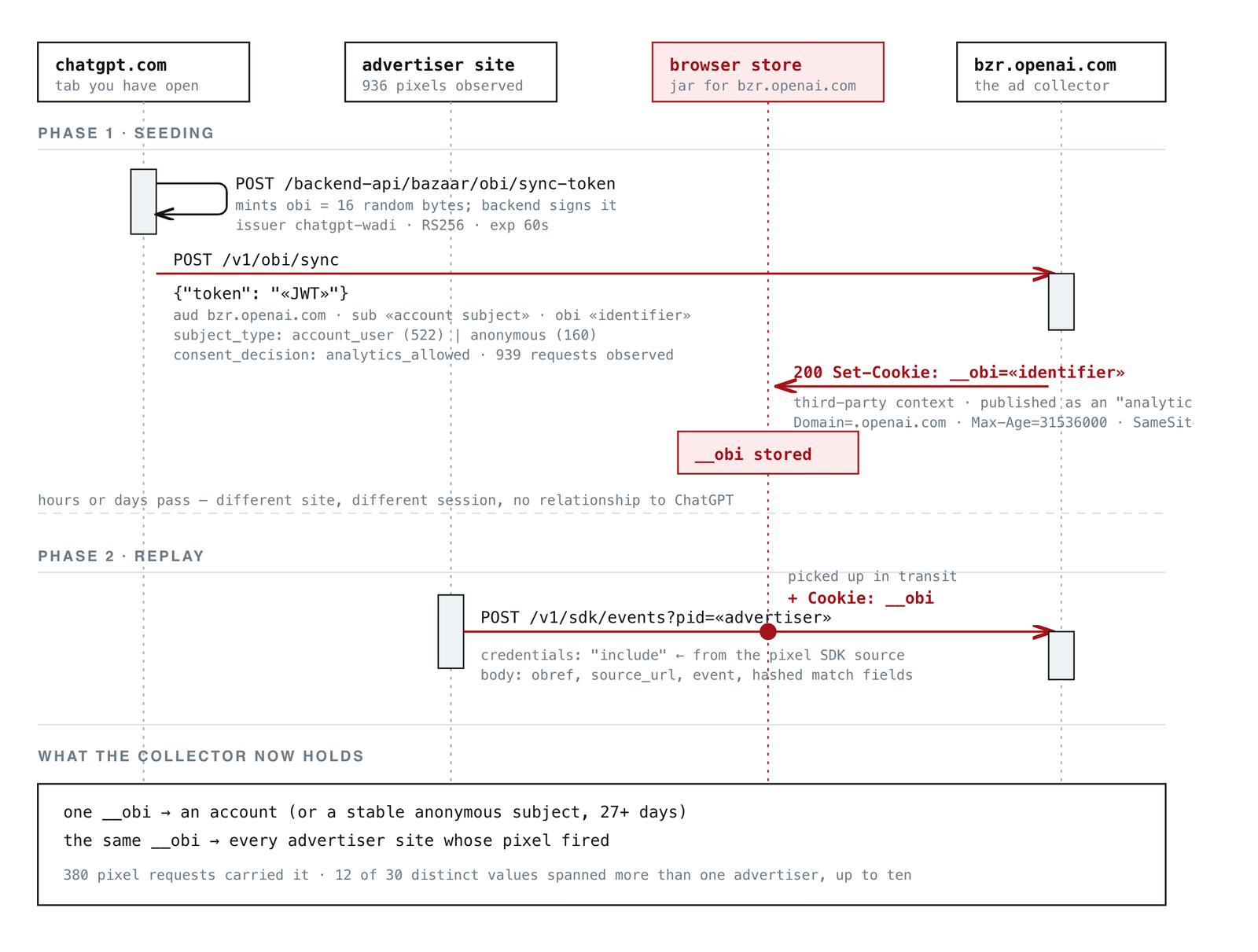
A security researcher at Buchodi's Threat Intel says OpenAI's advertising platform has quietly been connecting what people read and buy elsewhere on the web to their ChatGPT accounts. The mechanism centres on a cookie called __obi, set on the openai.com domain and generated by a service OpenAI calls bazaar, which returns a signed token binding the identifier to an account subject. The cookie carries SameSite=none and Secure attributes with a one year lifespan, the exact configuration needed for it to travel on cross site requests.
Any advertiser that buys ads on ChatGPT installs OpenAI code on its own site, much like retailers already run Meta and Google tracking tags. When a visitor loads that page, the __obi value is sent back to OpenAI alongside data about what is being browsed, including products being searched for, articles being read and purchase behaviour. The write up says the researcher reproduced the whole chain on his own phone with two independent capture methods, and cross checked it against several months of observed traffic covering 936 distinct advertiser pixels across 1,029 hostnames.
OpenAI has not commented publicly on the findings. The report lands as large model makers look for revenue beyond subscriptions, and as regulators in the UK and EU tighten rules on cross site tracking consent. For founders shipping AI products, the practical read is that ad pixels attached to model platforms now carry account level identity, not just page level signals. Anyone running a site with an OpenAI ad script should treat the data it collects the way they treat any other identity linked tracker.