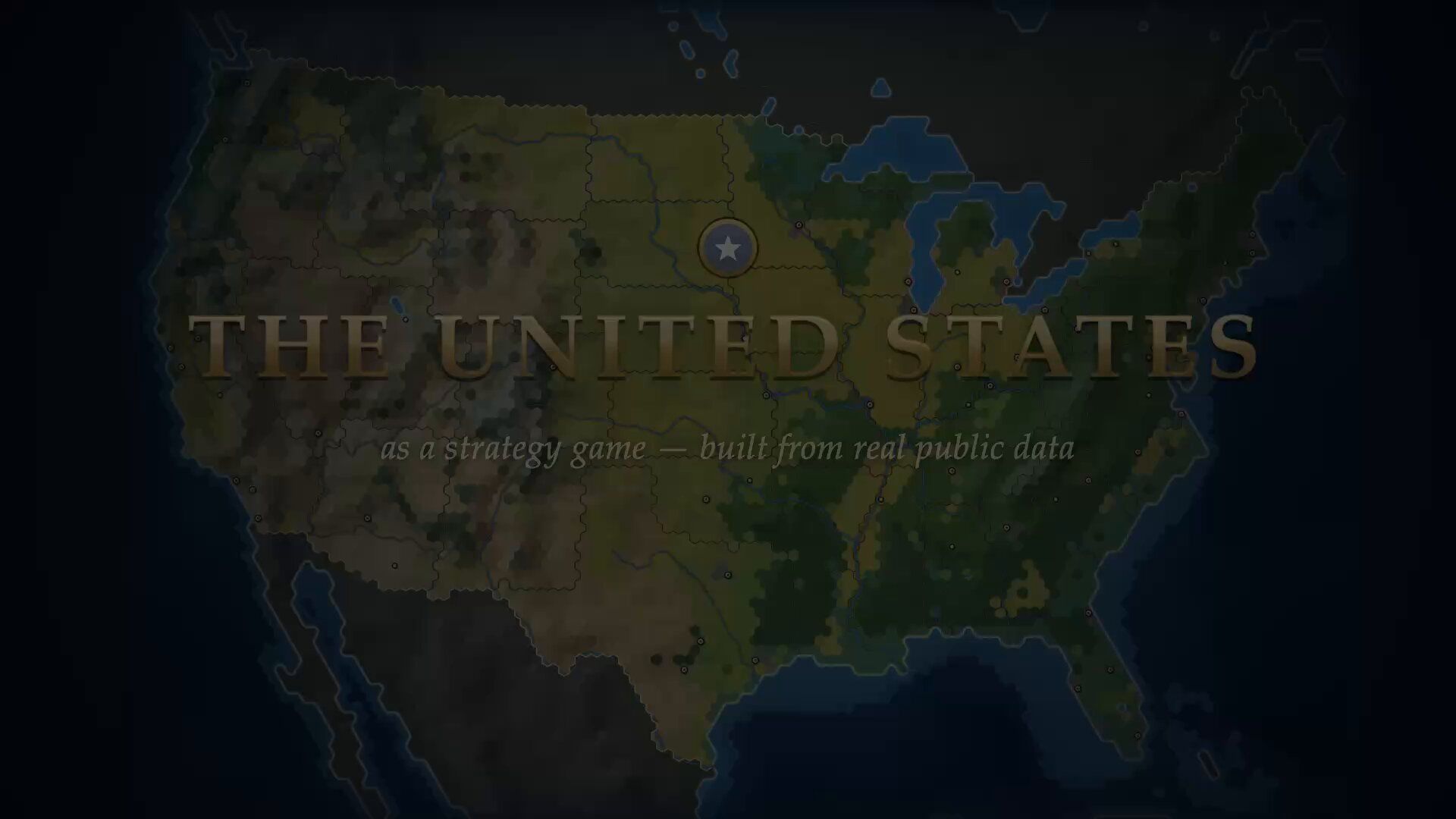
Andrej Karpathy has shown what a long unattended coding agent can actually do. In a post on X, the former Tesla and OpenAI researcher said he asked Claude to populate a Civilization-style game map of the United States with real data. Working through Anthropic's Opus 5.5 model, the agent downloaded and parsed public datasets, then wrote roughly 45,000 lines of code over about seven and a half hours before the map finally ran. The post drew close to 2.5 million views and more than 26,000 likes inside a day.
The result is not a toy. The map draws on 31 real sources, including the Census Bureau, BEA, BLS, EIA, NOAA, USGS, the FAA, FEMA and the CDC. Elevation, land cover, GDP, jobs, power plants, mines, ports, airports, freight flows and disaster records are all merged onto a single 25 km hexagonal grid. The data is then translated into Civilization-style terms: gold yield stands for GDP, and each city's districts mirror its real industry specialisations, such as San Francisco's mix of software and finance.
For founders, the experiment is a signal about agentic workflows. Most of the value came from letting an agent grind through messy, multi-source data without human babysitting, then hand back something checkable. Karpathy's own suggestion was to try a smaller version on your own data, for example a map of customers or sales regions. It is a reminder that today's models are strongest when a task is long, tedious and verifiable, exactly the kind of back-office work most teams still do by hand.