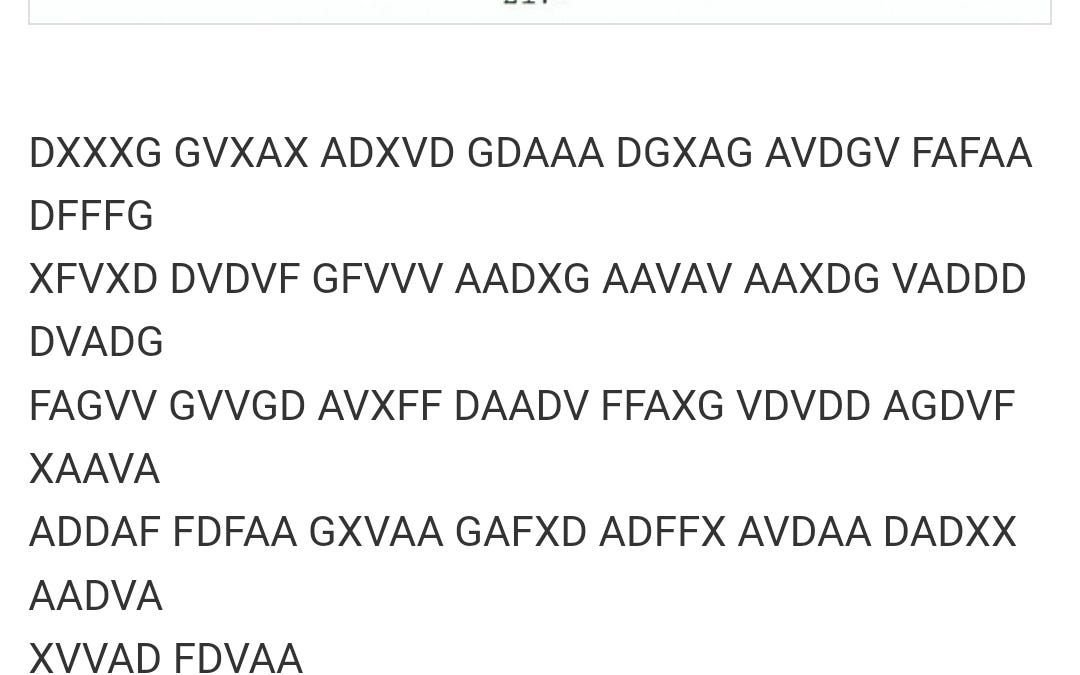
Cipher enthusiasts keep a running list of the world's unsolved puzzles, and on it sits a set of German radio messages from the First World War encrypted with the ADFGVX method. More than a hundred of these messages have been broken over the decades, many of them by codebreaking expert George Lasry. A handful have resisted every attempt. One of them, transmitted on 27 November 1918, has now been decoded, and the work was done by GPT-6 Astra.
The model proposed that the encryption word was TRUPPENVERSCHIEBUNG, a key drawn from J. Rives Childs's history of German military ciphers. That choice also explains why the message sat unread for so long: the key was believed to have entered service on 9 December 1918, roughly two weeks after this transmission. Astra's plaintext reads that an English cruiser arrived at Sevastopol on the 24th, and an allied squadron follows on the 26th.
What lifts the result beyond a party trick is that Astra checked itself against history rather than stopping at a plausible answer. It found that HMS Canterbury reached Sevastopol on 24 November 1918 according to the ship's original logs, and that an allied squadron arrived two days later. The author, who writes under the name prinz, had no record of the message ever being solved before. For founders, the takeaway is quieter than a benchmark score: a general model did careful multi-step reasoning, cited its source, and then went looking for independent evidence.