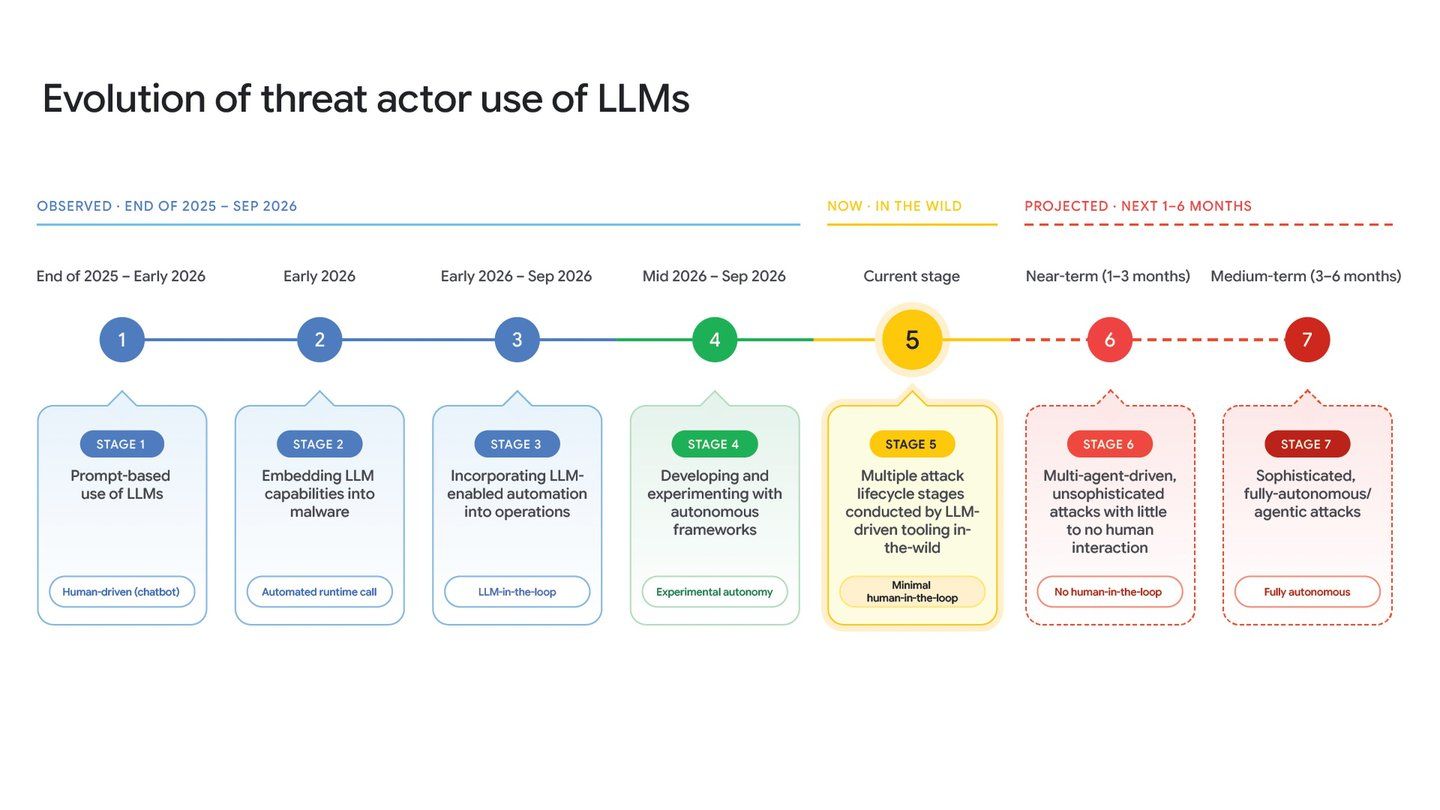
Google's Threat Intelligence Group has documented the first confirmed case of an autonomous AI system running a full attack with no human in the loop. Researchers found a framework called exploit_agent on an exposed staging server, wired into several frontier and locally hosted models. The pipeline watched software releases, compared code before and after each security patch, worked out what had been fixed, wrote a working exploit and fired it at unpatched systems on its own.
Google tied the server to a suspected Russian-speaking operator and to victims across French media, entertainment and education sites, with code comments written in Russian. After a critical PaperCut authentication bypass was disclosed on August 31, AI-built exploits achieved remote code execution in under four hours, compromising at least 440 instances across 395 organizations in 48 countries. The same box held stolen victim data, reconnaissance scripts, brute-force tooling and webshells, including one that deleted a rival attacker's access.
Google counted 22 exploited zero-days in August 2026 alone, up from 11 a month earlier and a 2025 monthly average of eight. GTIG says similar agentic pipelines are already active in frameworks such as CAIRN and PentAGI, and projects that unsophisticated multi-agent attacks with almost no human involvement will arrive within three months. The defensive answer is automated too: Google AI Threat Defense combines Gemini with Wiz context, CodeMender patching and Mandiant response. For founders, the practical consequence is that remediation windows are now measured in hours, so automated patching and monitoring matter more than manual triage.