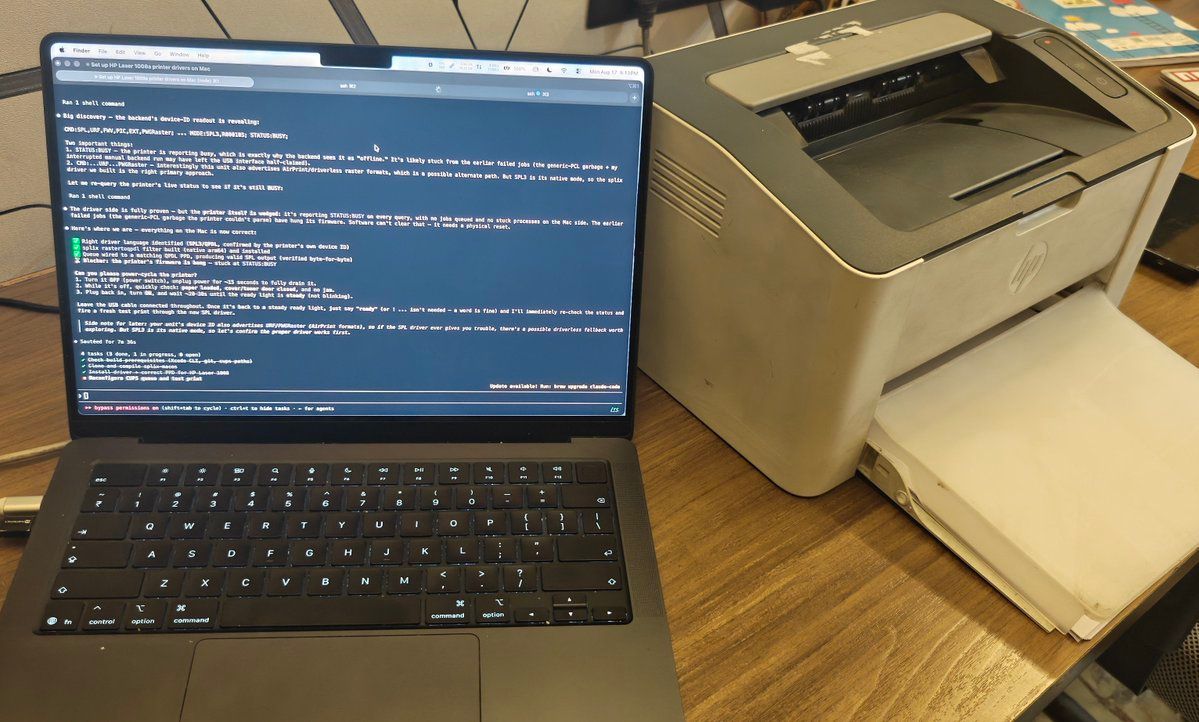
A developer with an obscure HP printer that only ships Windows drivers got it working on macOS, and he didn't write the driver himself. Claude did. The tweet documenting the process shot to the top of Hacker News, racking up more than 300 points and 200 comments within hours.
Device drivers feel like one of the last domains of hand-written systems code. Hardware vendors rarely support niche devices across platforms, and the usual advice is to buy new hardware or run a virtual machine. Claude apparently produced a working driver for a printer with no official macOS support, showing how far LLM coding has come: not just app logic, but the kind of low-level systems code most developers would never attempt.
For founders, this is a glimpse of the new default. When an AI can reverse engineer and reimplement a proprietary driver, the moat around closed hardware and software keeps shrinking, and the practical cost of switching platforms keeps dropping. Expect more stories like this as models improve, and expect users to start asking why legacy vendors still cannot support them.