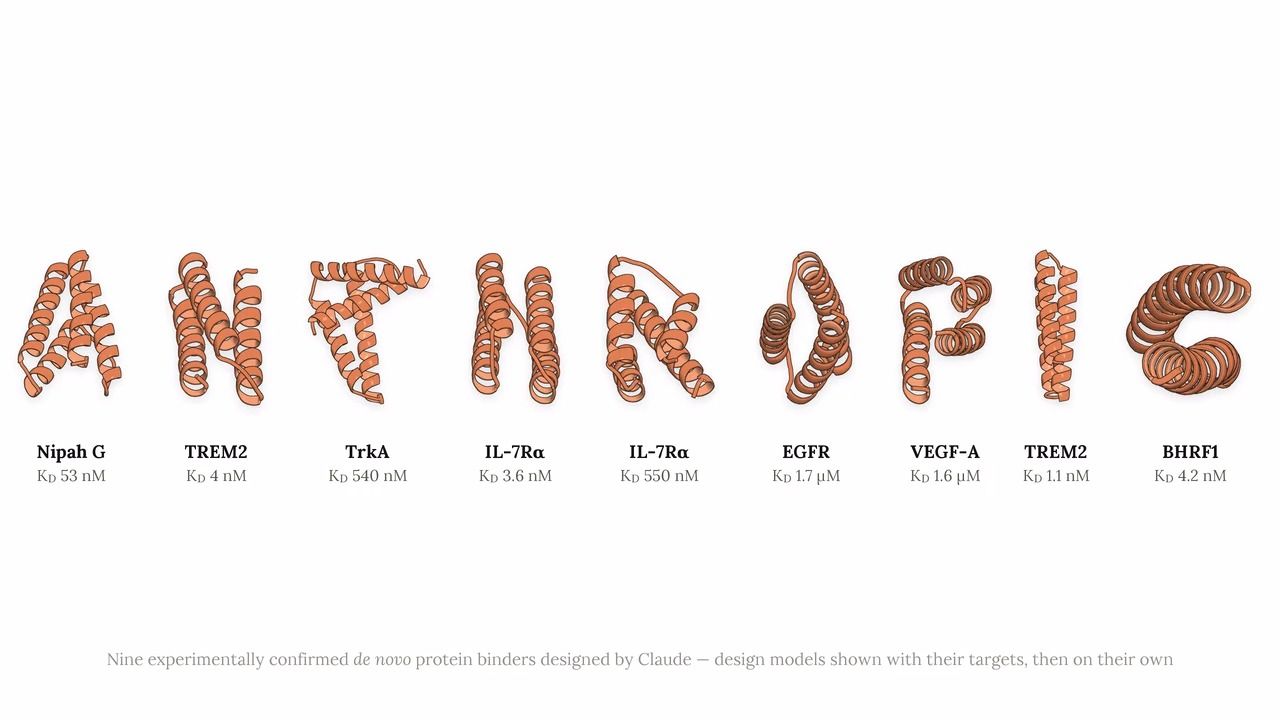
Anthropic says its life sciences team has published early results showing Claude can design novel proteins from scratch. Given a protein design prompt written by a human expert, Claude autonomously designed protein binders against 14 of 15 targets. Between 22 and 35 percent of Claude's designs bound successfully, depending on the setup, against a typical field success rate of 10 to 15 percent. Partners Adaptyv Bio and Twist Bioscience independently built and tested the proteins.
The work caps several months of research partnerships with six organizations developing new medicines: BigHat Biosciences, Bristol Myers Squibb, Divergence Labs, Enveda, Generate Biomedicines and The Column Group. Anthropic says it has also begun drug discovery programs of its own, including work on rare childhood forms of muscular dystrophy, where Claude handles much of the scientific and operational work.
Anthropic is careful with the claim. Protein binders are not drugs, and designing a high affinity binder is only the first step before the safety and efficacy work that decides whether a molecule ever reaches a patient. Even so, the post argues the results show where AI can compress timelines in medicine, and where Claude still needs to improve. Anthropic says it plans to scale the effort substantially and has published technical reports and preprints alongside the update.