When an AI system solves a difficult mathematical problem, the usual explanation is that it has simply become more intelligent. It absorbed millions of examples, or reinforcement learning taught it better reasoning strategies, or it is developing something resembling genuine mathematical intuition. A new essay by researcher Davide Piffer argues all of these may contain some truth while overlooking a simpler possibility: AI has access to a vastly larger working memory than the human brain.
More precisely, AI draws on an enormous external symbolic workspace that performs many of the functions working memory performs in humans. That difference matters especially in mathematics. A human mathematician can hold only a small number of unfamiliar elements in mind at once. An AI model can keep the entire problem statement, hundreds of intermediate equations, several abandoned approaches, and relevant definitions available at all times. It is effectively out-remembering rather than out-thinking its human counterparts.
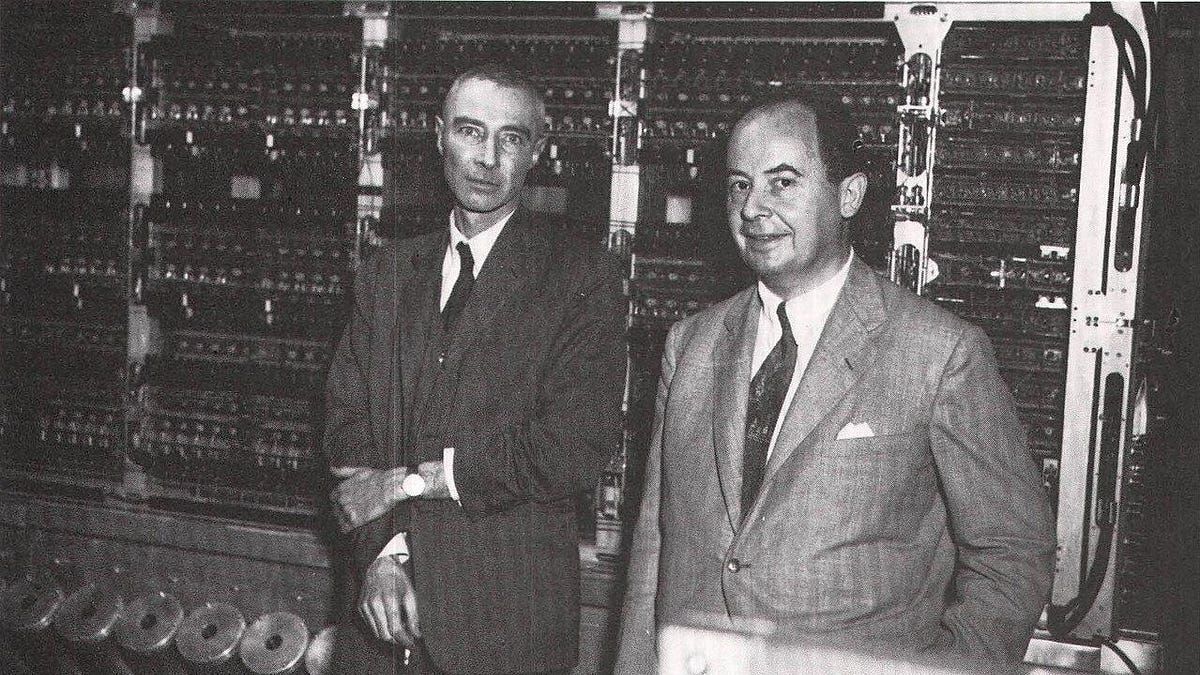
The essay frames AI as less like an electronic Einstein and more like a machine-amplified von Neumann: immense speed, breadth, and symbolic memory. If that framing holds, the practical takeaway shifts. Progress on hard reasoning problems may come less from chasing deeper intuition and more from building larger, better-organised external memory that models can manipulate fluently. That reframes what we are actually optimising when we scale models.