A wholesale distributor runs on two things that never stop moving: stock and paperwork. Every purchase order, back-order and delivery note is a small decision someone has to make, and most distribution businesses still make them in a spreadsheet and an inbox.
That is the work AI software is now sold to do. The catch is that wholesale software is secretive about price, and "AI" on a feature grid can mean anything from purchase-order suggestions to a chatbot bolted onto a support page. Some include it, some sell it as an add-on.
Below are eight platforms that publish what they cost, with what their AI does and whether it is included. Prices come from the vendors' own pages in November 2026, in USD unless stated.
What "AI" Actually Means on a Wholesale Platform
Across the vendors that ship something real, the AI lands in three places: forecasting and replenishment (reading demand history to suggest what to reorder), document and order entry (turning a purchase order or an email into structured line items), and reporting (asking a plain-language question about stock instead of building a report).
Watch the add-on line. Cin7 lists demand forecasting under "Extend Cin7 with add-ons", and inFlow's AI Report Assistant costs extra on the entry plan. A feature named on a marketing page is not always one you get at the standard price.
1. Cin7 — Forecasting and B2B Portals for Higher Volumes
Cin7 is a well-known inventory platform for product businesses selling through several channels at once — wholesale, marketplaces, retail and a B2B portal for trade customers. It handles multi-location stock, purchasing, kitting and warehouse workflows, and lists wholesale and distribution among its industries.
Pricing starts at $349 per month, rising to $599 and then $1,199 per month as volume scales — USD, excluding tax. AI-generated product descriptions and an "Ask Me Anything" reporting assistant sit inside the product, while Cin7 ForesightAI — AI demand forecasting — is an add-on with no published price.
Why it made the list: the most complete B2B portal and forecasting story here, but the forecasting AI is a separate purchase you have to quote.
2. inFlow Inventory — AI Reporting Built In From the Mid Tier
inFlow targets smaller operations, from solo operators to teams of 50. Three products: inFlow Inventory for stock and orders, inFlow Manufacturing for assembly and bills of materials, and inFlow Stockroom for consumables tracking.
Billed annually, inFlow Inventory runs at 99, 299, 499 and 699 USD per month billed annually across Lite, Core, Pro and Max; monthly billing costs $129, $379, $629 and $879. Its "built-in AI Report Assistant" is a $39 add-on on Lite and included on higher plans. Extra team members are $29 each per month.
Why it made the list: the clearest published answer in this group to "what does the AI cost?" — and an honest reminder to check which tier it starts on.
3. Zoho Inventory — The Cheapest Route Into AI-Assisted Stock Control
Zoho Inventory is part of the wider Zoho suite, which matters if you already run Zoho Books or Zoho CRM: orders, invoices and customer records share one account. It covers purchase orders, warehousing, fulfilment, multichannel selling and shipping integrations.
Pricing is per organisation rather than per user: Zoho Inventory is $29, $79, $129 and $249 per month billed annually for Standard, Professional, Premium and Enterprise, covering 500 to 15,000 orders a month with two users to start. The AI is Zia, Zoho's assistant, documented under "AI in Zoho Inventory" rather than sold separately.
Why it made the list: the lowest entry price in this article that still comes with a vendor assistant, and the only one priced per organisation instead of per seat.
4. Katana — AI Replenishment on a Genuinely Free Tier
Katana is cloud inventory and production software for product businesses: multi-location stock, sales orders, purchasing and integrations. Its AI assistant answers questions about the platform itself.
Start with Katana's free plan: $0 with no card required, up to 30 SKUs, unlimited users, integrations and locations. "Katana AI and AI Replenishment" — AI purchase-order recommendations based on demand history — sits on the Advantage tier, which Katana does not price publicly because every setup is scoped individually.
Why it made the list: a real free tier you can run a small catalogue on, and an unusually clear statement that the replenishment AI only arrives on the quoted plan.
5. Orderwerks — Order Entry With an AI Assistant Beside Your Inbox
Orderwerks is B2B order management for distributors and manufacturers, listing firearms, tobacco and wholesale distribution among its industries. It replaces phone, text and emailed orders with a portal, and connects to an AI assistant you can ask about customers, stock and orders in plain language — it drafts quotes and orders for approval before anything is submitted.
The base platform — web portal plus sales app — is $60 per user per month, with volume pricing for teams of five or more. Delivery and van sales cost extra: Enroute is $150 per month plus $25 per driver, or $50 per driver for Pro. Onboarding runs from a $1,000 quick start to white-glove setup from $2,500, and there are no long-term contracts.
Why it made the list: the most concrete AI feature in the group — an assistant that drafts actual quotes and orders, with a human approval step built in.
Three Platforms With Published Prices and No AI at All
It is worth knowing which inventory platforms are quietly AI-free, because for a small distributor that may be the honest choice: stable software at a published price beats a half-finished assistant.
Ordoro sells three modules — shipping at free, $59 and $149 per month by label volume, inventory from $349, dropshipping from $299. The pricing page names automation rules, batch processing and advanced analytics, and no AI feature; the only "AI" on it is a survey option.
Megaventory charges $135 per month for five users on Pro — as low as $27 per user annually — covering 50,000 transactions and 20,000 products, with extra users at $45 each. Barcode scanning, automated tasks and report creation are included; AI is not mentioned on the site.
Salesbinder is the cheapest paid option here at $9, $19, $49 and $99 per month, tiered by active records from 2,500 to 100,000, with extra users at $3 per month. Ecount ERP advertises all features and unlimited users for $55 per month. Neither publishes an AI feature.
The Platforms That Still Won't Tell You the Price
Brightpearl says "Request pricing now" and names no AI feature, yet advertises automated inventory purchasing recommendations based on demand forecasting and sales trends — the capability most people mean by AI here, without the label or a public number.
Others keep everything behind a demo: BlueCart markets a "BlueCart Assistant" but no plan prices, JOOR sells to smaller brands, request-pricing only, NuORDER publishes no card — its $7,500 figure is a promotional ERP-integration saving, not a price — and Pepperi and RepSpark are demo-only, though RepSpark names an AI Order Insights feature. If a vendor won't put a number on the page, you set the anchor, not them.
How to Choose Without Sitting Through Five Demos
Start with the pricing shape, because it decides your bill more than the feature list. Per-user platforms such as Orderwerks at $60 per user and inFlow at $29 per extra member punish a large counter team; per-organisation pricing such as Zoho Inventory stays cheap as headcount grows. Volume pricing such as Salesbinder's record tiers or Megaventory's transaction bands charges for data, not people.
Then ask the AI question in writing, naming the tier: is forecasting or reporting AI included in the plan I am buying, and what limits apply? Cin7 sells forecasting AI as an add-on, Katana puts replenishment AI on a quoted plan, and inFlow includes its AI Report Assistant from Core upward. All three answers are defensible — just different bills.
Finally, check the exit before the entrance. Orderwerks states there are no long-term contracts, while several vendors price their headline numbers on annual billing — worth 20% at inFlow, and the basis of Zoho's published tiers. Month-to-month usually costs the higher monthly figure.
The Honest Takeaway
If the goal is fewer manual decisions, the AI that changes your week is forecasting and replenishment — deciding what to reorder before you run out. Only Cin7 and Katana market that explicitly, and neither publishes its price. In the mid-market, Zoho Inventory at $29 per organisation per month and inFlow from 99 USD annually are where an assistant is priced and visible.
If the goal is predictability, the priced no-AI group is not a compromise — Ordoro from free, Megaventory at $135 for five users, Salesbinder from $9, Ecount at $55 with unlimited users. Buy the assistant when ordering is your bottleneck, and the plain ledger when it is not.
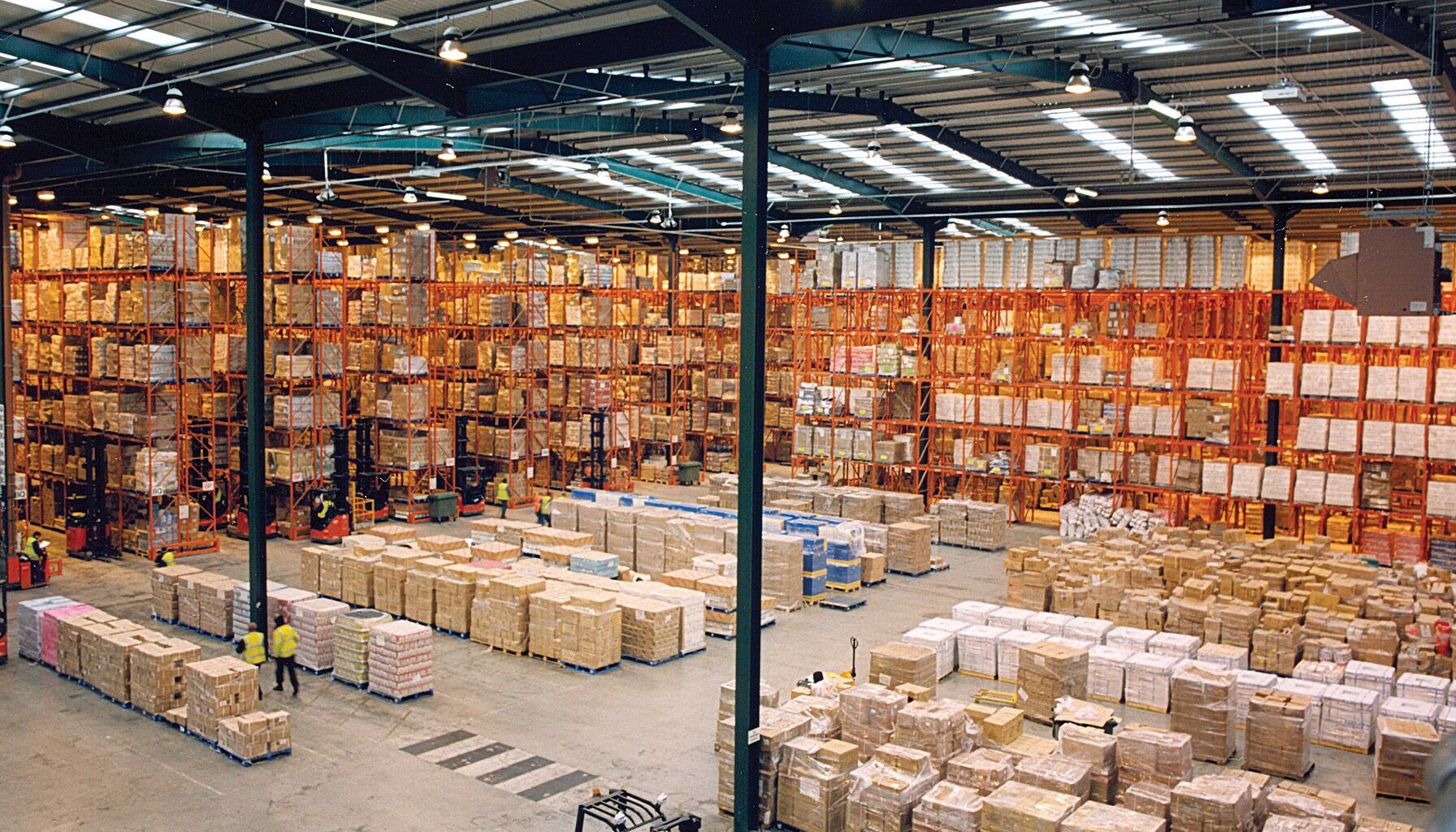
Cover photograph: Axisadman, CC BY-SA 3.0, via Wikimedia Commons.