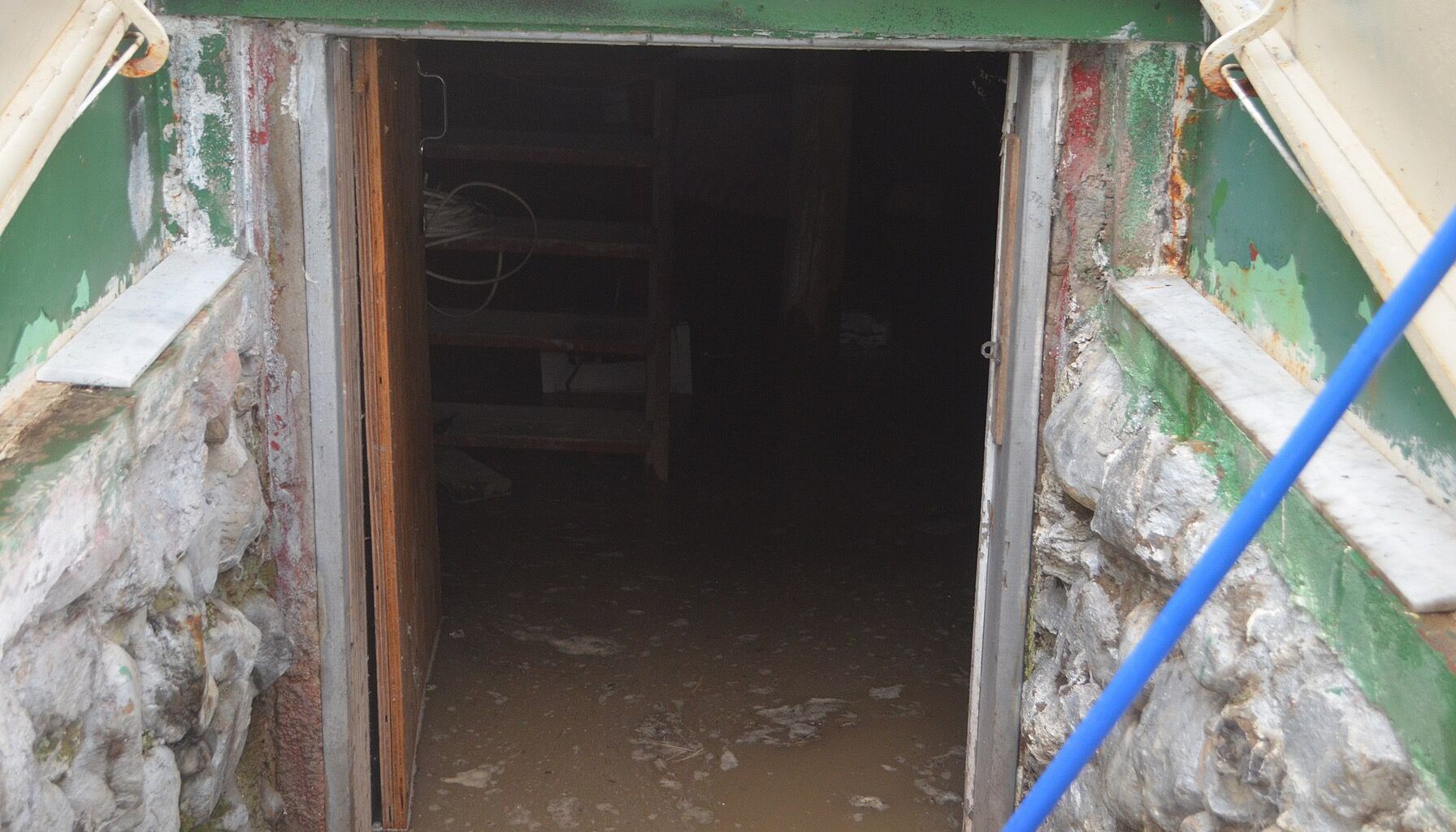
Restoration is a documentation business that happens to involve drying equipment. A water-damage job is judged on what you can prove: moisture readings, drying logs with dates and times, photos before and after, and a scope the carrier will actually pay for.
For a restoration company in 2026, the useful question is not whether a platform has a chatbot but whether it can turn field photos, readings and voice notes into a carrier-ready scope without retyping the job at night.
We read the pricing pages of 16 platforms used by water, fire and mould restoration companies. Seven publish real numbers; two names that sit between most US firms and getting paid publish nothing. Here is what each costs, and where AI genuinely shows up.
How restoration software is priced: four different units
The market bills in four shapes. A monthly platform fee scaled by job volume (Encircle). A per-seat subscription with an annual minimum (Albi, Rolldog). A credit or pack model where you buy a block of tours and sketches each month (DocuSketch). And a flat per-location price with unlimited users (ServiceMinder, iRestore).
The unit decides how your bill behaves in a quiet month and in a storm season: the same company can pay $285 a month or $6,000 a year for similar-sounding software.
1. Encircle — field documentation that drafts the scope
Encircle is built for the crew on site. Photos and video, 360-degree walkthroughs, moisture maps, drying logs, contents inventories and 2D floor plans all land in one job file.
Its Scope to Estimate feature is the AI claim that matters: field data becomes an IICRC-aligned scope you export into Xactimate, so the estimator reviews rather than rebuilds. The company describes that scoping as Encircle reporting "powered by Encircle AI".
Pricing runs on job volume, not seats. The published entry plan is $285 per month billed monthly, or $3,135 if you pay for the year, with larger tiers above it. Encircle Edge, which adds production and labour-rate reporting, is $900 per user per year, and AI Content Item Descriptions is an annual add-on rather than bundled.
Why it made the list: the clearest example of AI doing the tedious half — writing up what the crew already photographed.
2. Albi — the restoration-specific operations platform
Albiware goes wider than documentation: marketing pipeline, job management, Xactimate estimate uploads, VoIP calling, HR and business-intelligence reporting in one system — one of the few platforms here built only for restoration rather than adapted from generic field service.
The unit is the seat: $60 per user per month for Base and $100 for Pro, against a minimum annual subscription of $6,000 (four seats), the number to check before assuming this is a small-shop tool. Setup is $1,000 for personalised onboarding, $2,500 for white glove and $4,500 for enterprise, and its Analytics and Automations packages start at $250 per month each.
Why it made the list: "Albi AI" sits in a priced add-on structure, and the minimum spend is stated on the page instead of discovered in a demo.
3. Rolldog — published per-seat tiers and opportunity scoring
Rolldog covers the sales side of restoration: accounts and contacts, opportunity tracking, alerting, forecasting and production management for companies whose work arrives as insurance referrals and repeat losses.
Its tiers are the most transparently priced here: Starter is $35 per user per month, Professional $59 and Enterprise $79, with 10% to 15% off if you commit annually and pay up front. The Rolldog pricing page also lists "AI scoring and opportunity health" among its features — the narrowest AI claim here, and a fair one: scoring rather than generated prose.
Why it made the list: you can verify both the price and the AI feature on the vendor's own page rather than trusting a demo call.
4. DocuSketch — tours, sketches and estimating priced by claim volume
DocuSketch documents a loss with a 360-degree tour and turns it into a measured sketch and floor plan. Its estimating module is charged against claim volume rather than headcount.
Two pack families: Express at $429, $649 and $1,095 per month for five, ten and twenty properties, or Standard at $379, $575 and $975 for the same volumes. Additional tour credits are $5 to $7 each, an overnight sketch $12 to $20, and an extra office location $129. Estimating starts at $500 for $50,000 of monthly claim volume and rises to $1,950 at $300,000 and above, with overages of 0.8% to 1.0%.
Why it made the list: it prices the work rather than the people, which is the right shape when your volume swings with the weather.
5. iRestore — flat team-size pricing and a setup fee
iRestore is an all-in-one restoration CRM covering job management, reporting, QuickBooks and support tickets. Its own pages name no AI feature, which makes it a useful baseline.
Pricing is by team size rather than seats used: $279 per month, or $379 per month for 25 to 50 with a $699 setup fee. Above 50 people it moves to enterprise pricing, and each additional location is $50 per month.
Why it made the list: a plainly priced, no-AI option that shows how much of the bill is the platform and how much is the AI layer.
6. ServiceMinder — one flat price, unlimited users
ServiceMinder is flat-rate field-service software used by restoration and cleaning companies for scheduling, estimates and customer records. Its pages name no AI, so it belongs here as a priced control.
The price is $369 per month per location with unlimited users. Against the $49 to $149 per user per month it compares itself to, the maths only tips its way past three or four users — per-seat pricing is cheap for a two-van shop and expensive for a twenty-person crew.
Why it made the list: the clearest illustration of the pricing shape that suits a growing crew.
7. Xcelerate — prices the marketing, quotes the software
Xcelerate sells restoration job-management software and, separately, Growth — a website and lead-generation product for companies competing for insurance work.
Growth publishes five packages, from Freedom at $299 per month plus $999 setup to Dominate at $1,999 plus $2,999, and lists an AI chat bot among the features. The job-management software itself is a strategy-session quote: the part you can buy off the page is the marketing, not the operations layer.
Why it made the list: it names a price for something in the stack, and says plainly where it will not.
The two names that never appear on a price list
If your work is insurance-funded in the United States, two companies sit between you and getting paid, and neither publishes a plan. Verisk sells Xactimate, XactContents and XactRestore as its Property Estimating and Restoration line, with no price on the site. Cotality, which absorbed CoreLogic and Next Gear Solutions, sells DASH for job management and Mitigate for water documentation — also with no price.
Cotality's own pages name plenty of AI, including a Model Context Protocol server for property intelligence and AI-powered roof-condition insights, but written for insurers and lenders rather than for your drying logs. So when a smaller platform says it integrates with Xactimate, read it this way: the estimate still gets built in the carrier's tool.
How to choose without sitting through six demos
Start with the billing unit, not the feature list. If storm season swings your volume, job-based or credit pricing will not punish you for a quiet month; if you carry a large office team at steady volume, a per-seat plan will beat it.
Then separate the AI you can price from the AI you cannot. Encircle charges for AI item descriptions as an annual add-on. Albi puts its automation in a $250-a-month package. Rolldog's AI is scoring inside a $35-to-$79 seat. The question to ask is what the AI costs per year, not whether it exists.
Finally, test the one workflow that eats your evenings: photos and readings in, carrier-ready scope out. A tool that saves an estimator two hours on every loss earns its $500 a month. A chat bot does not.
The honest takeaway
AI in restoration is strongest today at documentation — turning photos, 360-degree tours and moisture readings into a scope somebody can review and approve. The closer you get to the carrier's estimate, the quieter this market goes about price.
Budget against published numbers rather than a demo: Encircle from $285 a month, Albi from $6,000 a year, Rolldog from $35 per user, DocuSketch from $379 a month, iRestore $279 a month and ServiceMinder $369 a month per location. If you run a bigger trades operation, our construction and trade contractors roundup covers the field-service side, and the cleaning businesses guide covers the admin-heavy end of the same work.
The pattern worth remembering: in this vertical the cheap tier is usually documentation and the expensive tier is usually estimating, and the vendors charging the most are the ones least likely to tell you what it costs.