A medical spa runs on two systems that do not naturally live together: a clinical record, where injectables need lot numbers, consents and photographs that survive a state board audit, and a front desk that answers at 7pm and takes a deposit.
In 2026 the market has split in two: salon platforms bolt on medical modules, medical platforms bolt on AI scribes, receptionists and marketing agents. The price gap between them is wide.
This guide is pricing-first: what eight platforms used by aesthetic clinics publish on their own sites, which ones name AI features, and where the cheap tier stops being enough.
What medical spa software actually does in 2026
The core jobs have not changed: charting that supports consents and good-faith exams, before-and-after photos, booking with deposits, point of sale with memberships, and injectable inventory that deducts as products are charted.
AI shows up in three places: ambient scribing that turns a visit into a draft note, voice AI that answers the phone and books, and marketing AI that drafts follow-ups. Most platforms ship one and sell the rest as add-ons.
1. Aesthetic Record — the lowest published seat price
Aesthetic Recordis built for aesthetic clinics rather than adapted from salon software: charts, before-and-after photos, cloud e-prescribing, consents and inventory in one record, with no monthly contract on the entry plan.
Essentials is published at $15 per user per month and Accelerator at $19, each with a one-time $399 startup and onboarding investment and up to five free support agents per prescriber. Pricing page
ChartSmart AI is sold separately: $30 a month for 50 charts, $50 for 100, $75 unlimited, first five free, from typed notes, dictation or telehealth transcripts.
Why it made the list: the cheapest published seat price here, with AI as a meter you switch on rather than a tier you must buy.
2. Pabau — one published price, from $104 a month
Pabauis a UK-built clinic platform used by aesthetic, dental and private clinics. Every plan carries the same core features, so team size sets the price.
The Solo plan for one user is published at $104 a month; Team, Medium, Group and Enterprise are quoted by user count, with roughly 20% off on annual billing. Pabau pricing
Pabau Scribe, the AI scribe, is unlimited and free; Engage Plus adds AI agents answering calls, WhatsApp and web chat, priced per location rather than per user — and that figure is not published.
Why it made the list: a published entry price, a free AI scribe, and per-location pricing that stays flat as the front desk grows.
3. MedAestheticsOS — AI scribe and receptionist in one flat price
MedAestheticsOSis the newest platform here and the most explicit about AI: charting by modality across eight service lines, consents sealed to the visit, lot-traceable injectables and a native BAA.
Pricing is flat, not per user: Solo Suite $299 a month for a single injector or location, Growth Clinic $699 for multi-provider or multi-location practices, and White-Label Enterprise $1,900 for franchise rollouts — month to month, with a 30-day trial.
An AI ambient scribe and a 24/7 AI receptionist are part of the platform, metered from a prepaid wallet rather than sold as unlimited — ask for an expected monthly AI cost.
Why it made the list: the only platform here quoting a single flat clinic price with both AI scribing and AI call answering included.
4. Ona — per-seat pricing with AI charting included
Onatakes the opposite approach: one platform priced by who uses it. A practitioner seat is $130 a month, a staff seat $45, everything included, 10% off annually — two practitioners and a front-desk seat is $305.
AI charting into your own templates and an ambient scribe sit inside the seat price; only the receptionist is priced separately — $100 for 400 minutes up to $400 for 1,500, then $0.20 a minute.
It is a general clinic platform, not an aesthetic-only one: injection maps and vial-level inventory sit alongside hormone, weight-management and insurance billing.
Why it made the list: the cleanest AI promise in the group — scribing included, the receptionist metered, no per-tier feature gating.
5. PreviewMD — AI previews priced by volume
PreviewMDis not an electronic record: it is a widget on your website that takes a patient selfie and shows a simulated facelift, neck-lift or body result before the consultation.
Plans are priced by previews: Starter $249 a month for 150, Pro $449 for 500 and Elite $999 for 1,200, or $2,490, $4,490 and $9,990 annually — two months free. Extra previews cost $1 each, with no setup fee and a 14-day trial.
Why it made the list: it prices a lead, not a seat, so measure it against one booked surgical consult rather than against your record system.
6. PatientNow — AI scribe on every plan, no published price
PatientNow is one of the older names in aesthetic practice management: charting, booking, patient portal, payments and marketing automation in one system.
Its three plans — Standard, Amplify and Catalyst — all read "pricing tailored to your practice". The $5,000 on its homepage is a holiday promotion, not a price.
AI Scribe is included on every plan, drafted into the visit record, and the marketing side carries AI-assisted analytics — a fair benchmark for what a quote hides.
Why it made the list: it shows what the quote-only half of this market now includes — the scribe is no longer the premium add-on.
7. Symplast — real AI, nothing published
Symplast describes itself as a KLAS-rated operating system for aesthetic medicine, mobile-first and cloud-based, built by plastic surgeons.
Its feature list names an entire AI group — AI scribe, ambient listening, chatbot and summaries — as shipped products, not a roadmap.
Pricing is unpublished: the pricing route returns a 404 and every plan routes to a demo. Treat it as quote-only, and expect a figure above the per-seat platforms here.
Why it made the list: the clearest example of this market's split — a genuine AI product with no number attached to it.
8. Crisalix — 3D simulation, quote-only
Crisalixis the 3D consultation tool: a phone or tablet scan converts 2D photos into a 3D model for breast, face and body consultations.
Its pricing page states that all features are AI powered and lists two plans, GOLD and PLATINUM — then ends at "Contact us | Request demo".
Why it made the list: simulation is the one AI job a general clinic platform will not cover, so it sits beside your record rather than inside it.
The rest of the shortlist, and why it is short
Three more names come up constantly and none publishes a price. Nextech sells Cora Scribe, an AI scribe it markets for ophthalmology and plastic surgery. RepeatMD adds a branded patient app with AI treatment advisors. TouchMD names no AI at all.
One trap: Moxie Suite now lives at joinmoxie.com — moxiesuite.com is parked — and its pricing is performance-based, a launch fee plus a share of sales. Get that percentage in writing.
Why almost nobody in aesthetics publishes a price
Five of the platforms above publish real numbers; PatientNow, Symplast, Crisalix, Nextech, RepeatMD and TouchMD do not. Aesthetic software is sold against seat count, locations and procedure mix, so quote-only pricing is how a two-room injector pays a fraction of what a fifteen-provider group pays.
The pattern is consistent: the transparent vendors are the newer, self-serve ones and the established names are the quiet ones. Expect a contract term and a negotiation when a vendor publishes nothing.
How to choose without sitting through five demos
Decide first whether you are buying a clinical record or a lead tool. PreviewMD does not replace an EMR, and an EMR will never show a patient a simulated result.
Then count who really needs a seat. Per-seat pricing such as Ona's $130 and $45 is expensive for a large front desk, while per-location and flat pricing rewards a bigger team in one building.
Then meter the AI. ChartSmart AI runs $30 to $75 a month by chart volume, Ona's receptionist $100 to $400 by call minutes with $0.20 overage, MedAestheticsOS from a prepaid wallet.
Finally, check the compliance line: a native business associate agreement, consents sealed to the visit, lot-level injectable inventory and a working 14 or 30-day trial separate a medical record from salon software.
The honest takeaway
The AI that saves the most time in a medical spa is still the note, not the chatbot. A scribe that removes documentation from every visit compounds daily; a receptionist pays for itself only if the phone rings outside hours.
For a solo injector, the cheapest published route is Aesthetic Record plus ChartSmart AI at under $100 a month all in. For two or three providers with a busy phone, Ona or MedAestheticsOS puts the scribe and the answering on one bill.
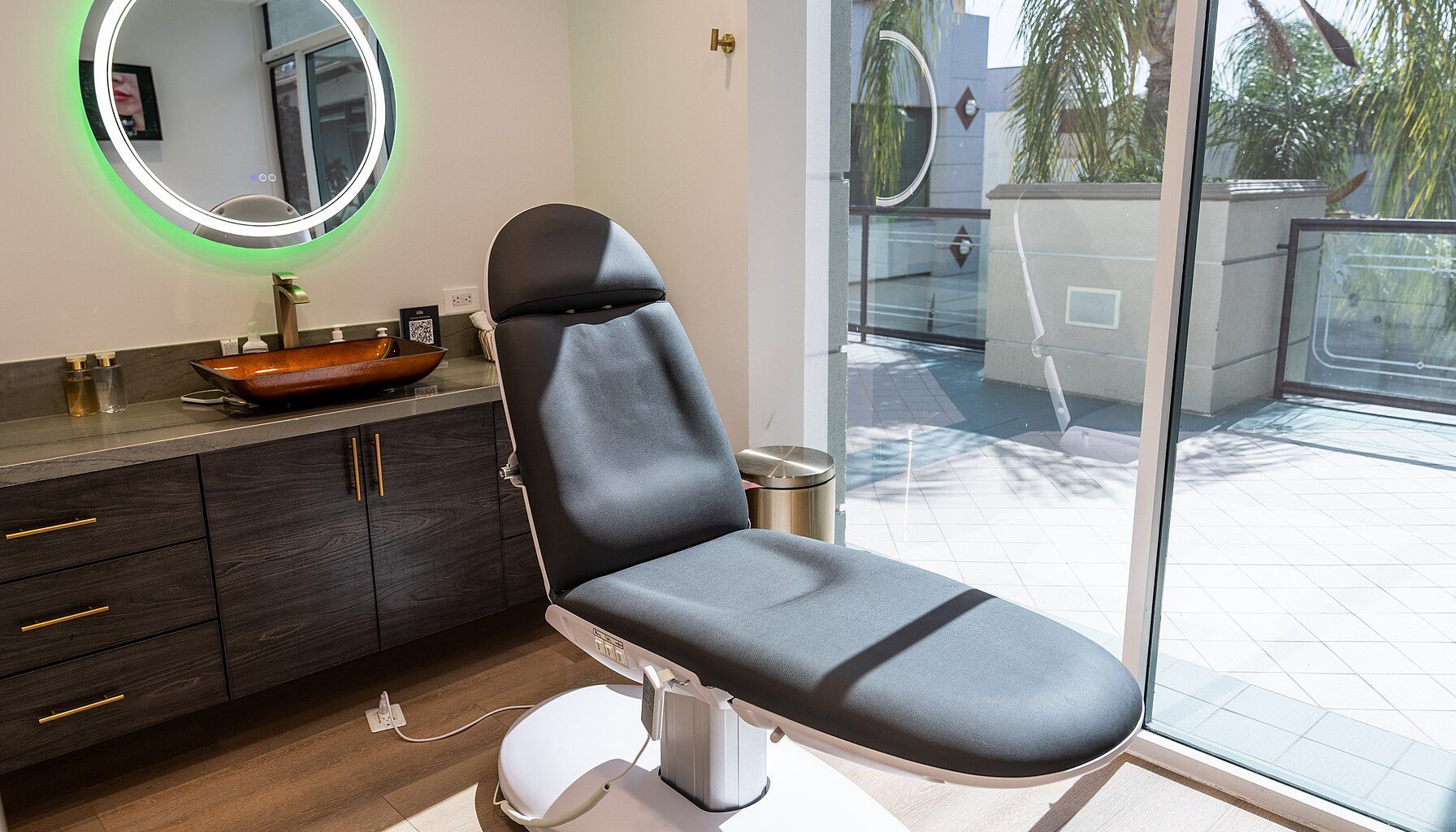
Cover photograph: TheExG, CC BY-SA 4.0, via Wikimedia Commons.