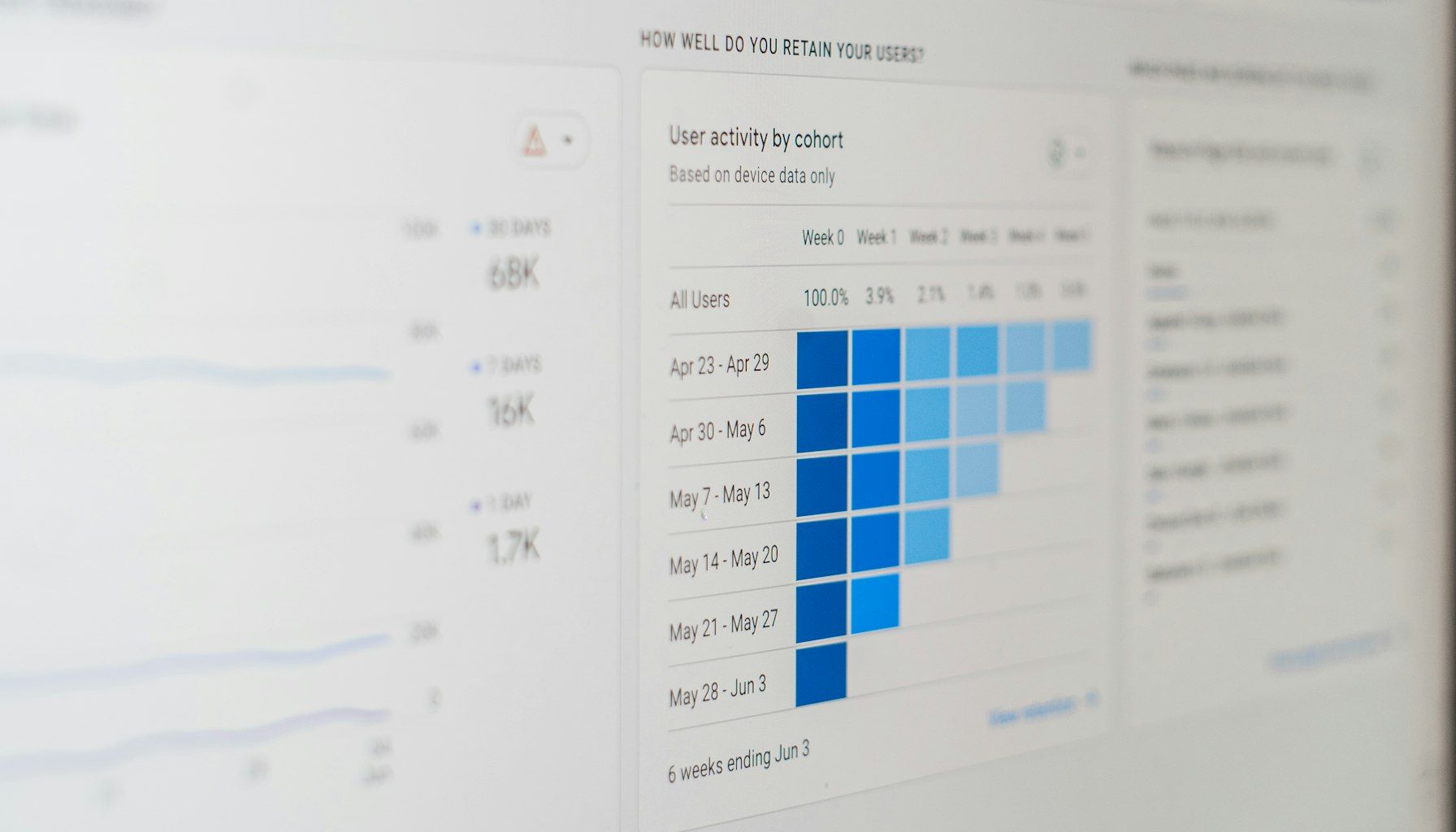
Data teams spent a decade building pipelines and dashboards. What is left is triage: too many requests, too many dashboards nobody opens, and a queue of people who want answers before lunch.
In 2026 the AI lands in two places. Some sits inside the tools that build and move data. The rest floats on the warehouse, where a chat box answers plain-English questions against a governed semantic layer.
The eight platforms below are the ones data teams run. Every price here was read from the vendor's own pricing page.
Why data teams are a different kind of AI buyer
A marketing team can trial an AI writing tool on a credit card. A data team cannot. The models, metric definitions and permissions live in systems that finance, legal and security already care about.
That is why the AI here is rarely a standalone subscription. It is a feature of the platform that already holds the data, billed per seat, per credit or per token.
1. dbt Cloud - the transformation layer that writes SQL with you
dbt Cloud runs the transformations that turn raw warehouse tables into queryable models. Its agent, dbt Wizard, is described as "an agent built for analytics engineering, grounded natively in your project" - it calls tools in your repo and validates what it produces.
Starter is $100 per user per month with five developer seats; Enterprise is custom; heavy projects pay as they go at $0.094 per DATT. dbt Wizard starts on a $100 credit for 30 days, then a $100 or $200 monthly allowance.
Why it made the list: the transformation layer's agent is priced in credits you can forecast.
2. Fivetran - managed pipelines where the price follows your volume
Fivetran keeps hundreds of connectors alive. Its platform pitches "Connect your AI to your data" - giving Claude, ChatGPT and agents trusted context from your warehouse, meaning metadata an assistant can read without an export.
There is no simple table. Fivetran applies a spend rate per plan plus a $5 base charge per standard connection, and its own example - a 1-200 employee company on Standard - lands at $511.15 a month. Transformations are metered per model run, from $0.01 down to $0.002 as volume rises.
Why it made the list: usage pricing is honest, but you must model the connectors you will run.
3. Airbyte - the open-source route, priced in credits
Airbyte takes the opposite view on lock-in: open-source connectors, optional self-hosting and a cloud product on top. Its AI story is the MCP context layer - governed pipes that feed data into AI clients. It is the cleanest path for teams that want the escape hatch.
Cloud pricing is published in full. Airbyte Standard starts at $20 a month with five credits included, roughly 1 GB of syncs; the tier for SSO and 15-minute syncs starts at $189 a month with 40 credits. Larger packs are listed openly, from $449 to $4,999 a month for 100 to 2,000 credits.
Why it made the list: the whole credit ladder is public, which is rare in data integration.
4. Metabase - self-serve BI with AI you can meter
Metabase is the tool non-technical colleagues are most likely to open: dashboards, a visual query builder and the Metabot assistant in one place. The latest release adds data apps, per-group control over which MCP tools a group can reach, and an AI Research mode.
Starter is $100 a month, or $90 billed annually with five users included and extras at $6 each per month. Pro is $575 a month ($517.50 annual) with ten users and $12 per extra user. The AI is metered openly: bring your own provider key, or pay $3.75 per million tokens, first million included.
Why it made the list: a BI vendor publishing token pricing in public is still unusual.
5. Hex - the notebook where agents draft the analysis
Hex is a collaborative notebook for analysts and data scientists: SQL and Python in one workspace, publishable as an app. Hex 4.0 leans into the agent-native future for analytics, with a Hex agent that drafts work inside the notebook.
Pricing is per editor. Community is free with an agent trial and small compute; Professional is $36 per editor per month; Team is $75 per editor per month with a 14-day trial and extended agent credits; Enterprise is a conversation. Hex states plainly that agent features consume credits, and every paid plan includes a grant.
Why it made the list: the AI billing model is one honest sentence, not a footnote.
6. ThoughtSpot - search-first analytics, priced from $25
ThoughtSpot bets that most people should never build a dashboard - they should ask a question. Its Spotter agents (Spotter, SpotterModel, SpotterViz, SpotterCode) cover natural-language search through to automated semantic modelling. Best where the data team is small and requests never stop.
It publishes starting points, not a full table: from $25 per user per month billed annually, $50 per user on the next tier up, and $0.10 per credit for usage-based pricing. "Starting as low as" is doing real work there - expect to model your own seat count and query volume.
Why it made the list: search-based analytics is the fastest way to take load off a two-person team.
7. Lightdash - AI-native BI built on your dbt models
Lightdash is built for teams whose metrics already live in dbt. It reads those models directly, so the semantic layer and the transformations stay in sync, and it bills by usage rather than seat, with unlimited users on every paid plan.
Cloud Pro starts at $3,000 a month with no per-seat pricing. Embedded analytics and AI are pay-as-you-go at $0.05 a load after the first 1,000 free, or $790 a month for 100,000 loads, plus a $490 monthly HIPAA BAA add-on. That entry price is the steepest here.
Why it made the list: the only vendor here selling unlimited seats and charging for queries instead.
8. Preset - managed Superset with a bring-your-own-key chatbot
Preset is the commercial home of Apache Superset: an open analytics platform without the infrastructure work. Its AI layer is plain and useful - Preset Chatbot answers questions grounded in your semantic layer, and Preset MCP connects AI clients to governed workspaces.
The free plan covers up to five users, and Professional is $20 per user per month billed annually, or $25 monthly. Embedded viewer licences start at $500 a month for 50 viewers. The chatbot has a 14-day trial and takes your own OpenRouter API key, keeping model costs yours.
Why it made the list: the cheapest way to test conversational analytics on governed data.
The platforms that keep their prices behind a demo
Five platforms worth knowing publish no numbers at all. Sigma Computing sells a spreadsheet-like BI layer with an agentic-tools menu, but pricing means a demo. Monte Carlo pitches itself as an agent-trust platform with an AI teammate called Bayes. Atlan sells a context layer for AI analysts and Secoda an always-on AI data analyst; Hightouch's usage-based AI Decisioning targets marketing teams.
One near-miss is Coalesce, which publishes a Starter plan at $150 per user per month beside a free Developer tier and calls itself the data operating layer where humans and AI agents build and govern data. That is positioning as much as product - if agentic transformation decides it, dbt Wizard ships more today.
None of that makes these five bad tools. It means a fair comparison is impossible without a call, and a sales call is a poor way to learn whether a platform fits a four-person team.
How to choose without sitting through six demos
Start with where the question gets asked. If non-technical colleagues are waiting, Metabase, ThoughtSpot and Preset solve that directly. If the pipeline is the bottleneck, dbt, Fivetran and Airbyte are where an agent saves real hours.
Then look at how the AI is billed. Seats with an included credit grant, as with Hex and dbt Wizard, behave predictably. Metered tokens and loads, as with Metabase, Lightdash and Fivetran, can land far either side of your estimate - so model a normal week before you sign.
Finally, check who owns the context. An assistant that cannot see your metric definitions will confidently answer the wrong question. Every platform above claims a semantic layer; shortlist the ones whose layer sits where your models already live.
The Honest Takeaway
AI in data tooling has stopped being a separate purchase. It is a priced line item inside platforms teams already pay for: $3.75 per million tokens in one place, a credit grant in another, $0.05 a load somewhere else. Good news for budgeting, bad news for feature-list comparisons.
If you are choosing one thing this quarter, pick it on where your team actually loses time, then read the AI metering before the feature list. A cheap agent grounded in your own models beats a smarter one that cannot see them.