Craft beverage is a paperwork business that happens to make beer and wine. A three-tank brewery still files excise returns, chases invoices and answers the same taproom questions.
AI arrived here later than in most industries, in two shapes: an assistant inside the operations platform itself (log a gravity reading by voice, ask what is left in the hop fridge) and machine learning inside analytics, scoring wine club members for churn risk.
Below are eight platforms a brewery, winery or taproom founder can buy today, with the prices published on their own sites. Four ship no AI at all — worth knowing before a demo.
What AI in craft beverage can and cannot do
It earns its place in hands-free data entry, compliance paperwork, plain-language inventory questions and churn prediction. It cannot cellar, package or pour, and it has no opinion on whether a batch is actually good.
The AI is also bundled into a subscription tier rather than sold as a module, and no vendor here meters an AI add-on. That makes the comparisons below simple.
1. FermentIQ — a brewery platform built around a voice assistant
FermentIQ is an early-release brewery platform wrapped around BrewBuddy, an assistant built on Claude that lives on every screen and on floor tablets. Say “Hey BrewBuddy — log 1.018 for FV3” and it records the reading, notes that gravity is still dropping on trend, and explains a stalled fermentation.
Ten modules cover production, fermentation, packaging, inventory, sales, distribution, compliance and HR. Pricing is public: FermentIQ starts at $30/month for homebrewing, then $149/month (Craft, up to 3 users), $299/month (Production, 10 users, 3 sites), $599/month (Regional) and from $1,200/month for multi-site. Annual billing saves about 8%, and there is a 30-day free trial.
Two caveats belong alongside the praise. It is young — the site’s counters show a handful of active breweries — and wine, spirits and cider support is in partner preview rather than generally available, so wineries should treat it as one to watch. Hardware integration is limited to Tilt for now.
Why it made the list: the only platform here where the AI is the product rather than a feature bolted on later.
2. Brewfather — the cheapest AI brewing assistant on the market
Brewfather covers recipe design, batch tracking, inventory and device integrations, and is used mainly by homebrewers and small-batch brewers.
The app is free for 25 recipes and batches. Brewfather Premium costs around $29.99 a year; Premium Plus at about $49.99 a year adds Brewfather AI with 500 AI credits a month, grounded in your own records. It can build a recipe around the hops you actually have in stock or adjust an existing one in plain language.
Why it made the list: AI-assisted recipe building for about the price of two pints a year.
3. Beer30 by The 5th Ingredient — AI over your own brewery data
Beer30 covers production, inventory, lot and keg tracking. Its AI layer, Beer30 Insights, is live: the vendor calls it a fully integrated AI management tool for breweries, and the premise is that you ask questions about your own data in plain language.
The price ladder is unusually clear. Beer30 Lite starts at $30/month (inventory, production scheduling, fermentation tracking); Essentials from $118/month; Essentials + Sales from $194/month; and Essentials + Sales + Finance from $313/month. Add-on modules are priced separately.
Why it made the list: an AI assistant over brewery data you already own, at a price a small brewery can absorb.
4. vinSUITE — machine learning pointed at wine club churn
vinSUITE runs wine clubs, POS, ecommerce and a DTC dashboard, and its analytics layer scores members rather than reporting on them: the vendor’s example shows a member at 94% prediction confidence and 82% churn risk.
Pricing for vinSUITE starts at $249/month for the full platform and scales with transaction volume, with a one-time standard implementation fee of $999.
Why it made the list: machine learning earning its keep, spotting club members before they cancel.
5. Commerce7 — a published DTC ladder, and no AI claim to be found
Commerce7 runs club subscriptions, ecommerce, POS, reservations and allocations for wineries. WinePulse analytics is included from the entry tier, but nothing on its pricing page claims an assistant or a copilot — a reminder that “modern commerce platform” is not the same as “AI”.
The Commerce7 ladder is set by your DTC revenue band: Lite at USD $59/month (up to $100K), Basic $149/month (up to $600K), Pro $399/month (up to $4M) and Experience $1,249/month ($4M–$6M), with transaction fees falling from 1.5% to 0.75% as you climb. Above $6M it is custom.
Why it made the list: the clearest price ladder in wine DTC, which makes it the benchmark to hold every other quote against.
6. WineDirect — a low monthly fee plus an onboarding charge
WineDirect is the DTC stack behind a large share of US wineries: club, ecommerce, POS, allocations and fulfilment. Nothing on its pages claims AI.
Its WineDirect pricing is banded by annual sales: DTC Starter is $79/month with a 2% transaction fee up to $200,000 a year; DTC Pro is $199/month with a 1% fee from $200,000 to $4M; beyond that it is custom. One-time onboarding is $399 on Starter, $999 on Pro and from $2,500 for custom work.
Why it made the list: it shows the real shape of wine DTC pricing — a subscription, a revenue-linked fee and an onboarding charge founders forget to budget.
7. Arryved — taproom POS with a published entry price
Arryved is a cloud point-of-sale built for the venue side of the business — tabs, merchandise, bottle retail and mug clubs. No AI features are named on its site.
It publishes its entry price as “Arryved 1–9 devices starting at $99.99/month”, one of the few POS prices in craft beverage not hidden behind a demo request. Larger footprints are quoted.
Why it made the list: a real published number for the part of the business that takes the money.
8. BrewMan — priced per concurrent user, not per seat
BrewMan from Premier Systems is long-standing production and distribution software with labelling, container tracking and route management. It charges for concurrent users rather than named seats, which suits a brewery where the floor team shares terminals. No AI is mentioned.
It is BrewMan US$90 per concurrent user per month for full access. Training is £350 a day plus travel, and hardware such as a capture scanner (£530) or label printer (£300) is bought separately. Prices exclude VAT.
Why it made the list: concurrent-user pricing beats per-seat pricing for a floor team that shares terminals.
Still quote-only: Ekos and Untappd for Business
Two platforms are worth a demo request but not worth budgeting from a website. Ekos covers production, inventory and accounting for beverage producers and publishes no figures at all on its pricing page. Untappd for Business pushes menus and promotions into the consumer app, but its price sits behind a form that says it varies by geography and market. Neither markets an AI assistant.
The three pricing shapes you are really choosing between
Almost every number above is one of three shapes: a per-user plan (FermentIQ, BrewMan), a per-device price (Arryved), or a subscription that scales with turnover and takes a cut of transactions (Commerce7, WineDirect, vinSUITE). The shape matters more than the headline: a three-user brewery on a $149/month plan commits $1,788 a year, while a winery doing $500,000 of DTC at 1.5% pays $7,500 in fees on top of its subscription.
How to choose without sitting through six demos
Start with the channel that makes your money. Taproom: judge device pricing and fees. Wholesale: judge invoicing, lot tracking and compliance. Wine club: judge the analytics on whether it tells you who to call.
Then test the AI on your own data. Assistants here are only as good as the records underneath: voice logging is valuable if your batches already live in the system, and churn scores are worthless if club records are incomplete. Import real spreadsheets, not sample data.
Finally, price the whole first year: onboarding fees of $399 to $2,500, training, hardware and add-ons routinely add 10–25% to the subscription you were comparing. If you also run food and a taproom kitchen, our roundup of AI tools for restaurants and hospitality covers the front-of-house side.
The Honest Takeaway
AI in craft beverage is real but narrow, and it is bundled rather than sold separately. The cheapest useful AI is a recipe assistant at around $50 a year. The most complete AI-and-operations bet is FermentIQ, early-release and brewery-first. The best AI at scale is analytics: Beer30 Insights over production data, vinSUITE over club churn.
For the rest of this list you are buying good software with no AI, and you should say so when you compare prices. A vendor that cannot show its AI working on your records has not earned a premium.
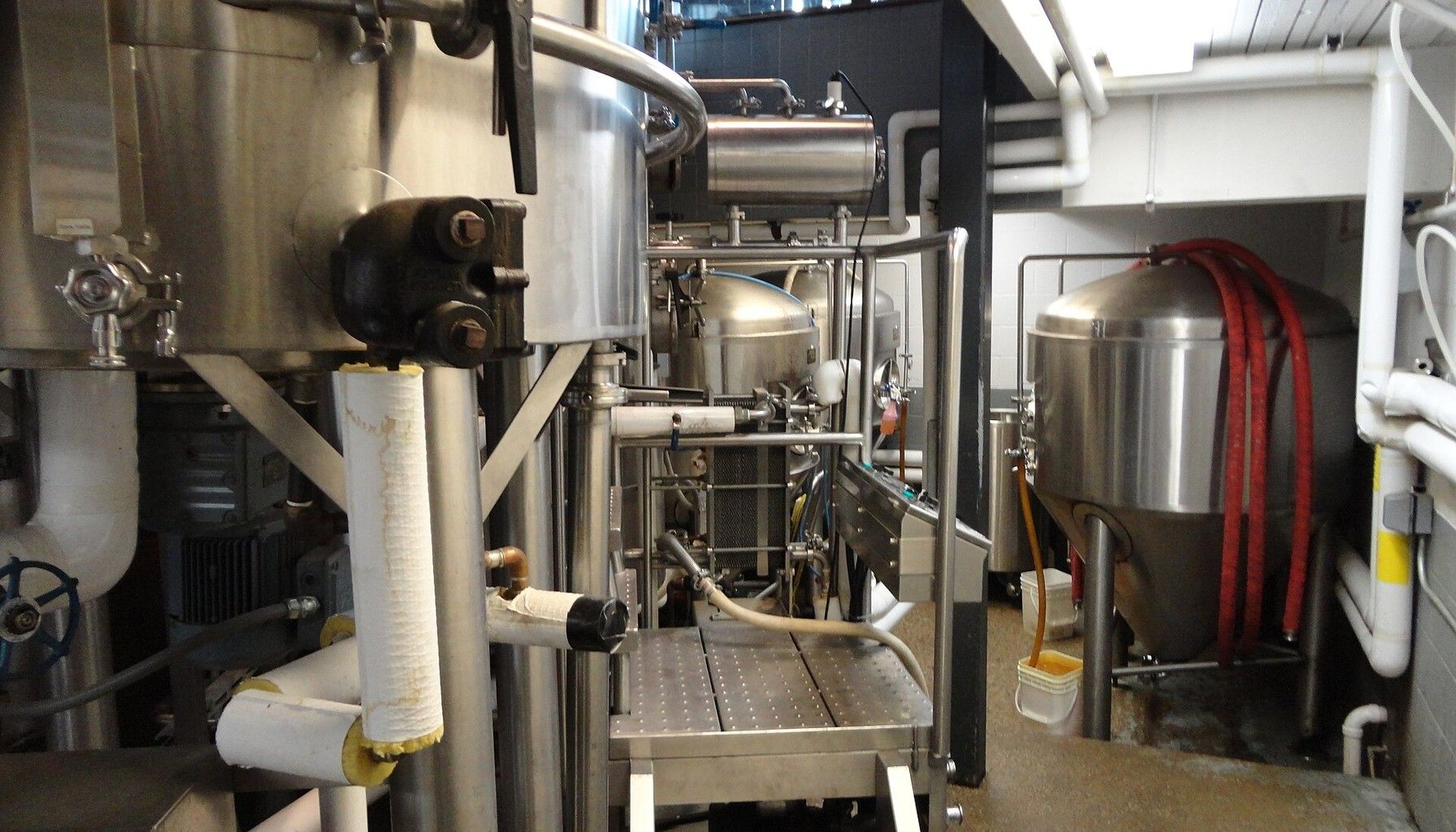
Cover photograph: Fujiwara06, CC BY-SA 3.0, via Wikimedia Commons.